

NC Joint Underwriters and Wind Pool Map Guide
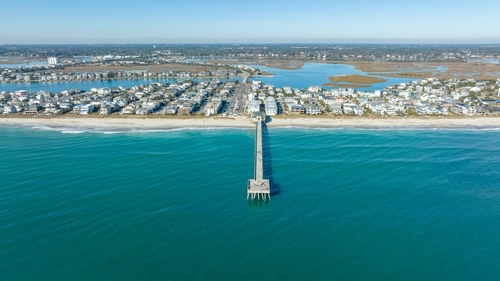
North Carolina is packed with beautiful beaches, lovely cities and restaurants as well as dozens of museums and other cultural attractions. It is a great place to live and raise a family.
The only bad news about living in North Carolina (particularly on the coast) is that homeowners insurance is expensive, this is especially true if you live in a beach community. Here are just a few of the coastal cities where insuring your home can be expensive and, in some cases, difficult to find coverage at all:
- Ocean Isle Beach
- Holden Beach
- Oak Island Beach
- Calabash
- Bald Head Island
- Kure Beach
- Wrightsville Beach
- Morehead City
- Emerald Isle
Cities in the Outer Banks such as the following can also be difficult and expensive to insure as well:
- Ocracoke
- Nags Head
- Manteo
- Corolla
The main issue with insurance in these areas is that wind and hail damage is often excluded from a standard homeowners policy which means you may need to purchase a separate policy or rider to be covered against hurricane and severe weather damage.
Here is a quick look at what you need to know about wind and hail insurance in North Carolina.
High Risk Areas In North Carolina
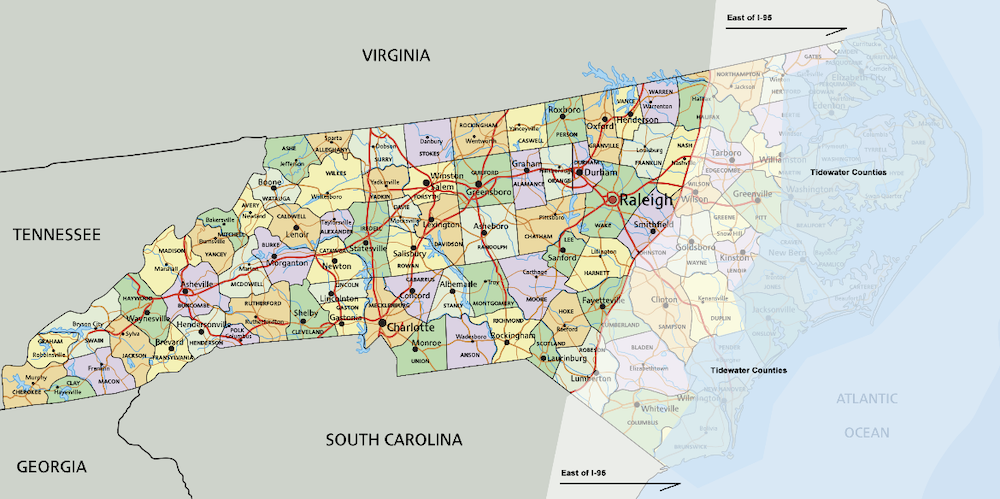
North Carolina Coastal Counties, Including Inner Coastal bordering east of I-95, and the tidewater counties bordering the Atlantic Ocean.
The majority of North Carolina’s coastal counties, there are 41 one of them east of I-95 are located in what is referred to as the Catastrophic Insurance Market which means that properties that fall into this are prone to hurricanes. This is especially true for the 19 coastal counties that are located right on the Atlantic Ocean.
As an example of the severe weather coastal North Carolina faces, when Hurricane Florence hit North Carolina in 2018 there were preliminary damage estimates of $16.7 billion which included 74,563 structures being flooded. Roughly 140,000 North Carolinians registered for disaster assistance after the storm.
Hurricane damage has made insurers reluctant to write policies in these areas making it difficult to find affordable coverage. Most standard homeowner policies in these areas exclude wind and hail damage from a standard policy. Meaning, you have to purchase two separate policies to protect your home.
In the majority of North Carolina coastal counties, homeowners will need to purchase additional coverage for hail and wind damage. Always verify that your current policy or any policy you are considering protects your home against wind and hail damage.
Homeowners that aren’t covered against these perils and cannot find coverage in the private market, may need to turn to the FAIR Plan or the Coastal Property Insurance Pool, which was formerly known as the Beach Plan. This is the state-run insurer of last resort for coastal communities. For questions or if you need homeowners insurance coverage, please visit our coastal home insurance page for more information.
What does a Wind and Hail Policy Cover?
Wind and hail coverage is often called Windstorm insurance and it is used to fill any coverage gaps that are created by a policy that excludes wind and hail damage. This coverage typically only activates when specific situations arise.
While policy requirements can vary, most windstorm insurance kicks in after wind is gusting over 35 miles per hour. This will typically cover damage that is caused by hurricanes or tornadoes.
A windstorm policy covers both your home as well as any personal belongings that are damaged by wind or hail. In addition, they offer coverage for other structures on the property like sheds, outbuildings, and other detached structures.
However, a windstorm policy, like a standard homeowners policy does not cover damage caused by flooding or storm surge. This means that to be full covered, you will need to purchase a separate flood insurance policy, so you are totaled covered.
While windstorm coverage may be available in the private market, there is a good chance you will have to find coverage with one of the state-run high-risk pools to fully protect our home.
High-Risk Insurance Pools in North Carolina
North Carolina has two high-risk pools for homeowners who cannot find a policy via private insurers. These high-risk plans require that all insurance companies that write coverage in the state must share the risk of insuring coastal properties.
Here is a quick overview of the two pools available to North Carolina homeowners:
The FAIR Plan
The FAIR Plan is an insurance pool that was created in 1969 by the North Carolina General Assembly and is available to all homeowners in North Carolina. The FAIR plan offers full peril coverage for both residential and commercial policyholders.
FAIR plan policies offer coverage for damage from wind, hail and fire.
The FAIR plan is administered by the North Carolina Joint Underwriting Association (NCJUA) and only covers non-coastal areas west of the intracoastal waterway (ICW). This includes cities such as
- Shallotte
- Wilmington
- Jacksonville
- New Bern
- Washington
- Williamston
- Elizabeth City
- Raleigh
- Charlotte
- Fayetteville
While the FAIR plan offers coverage to these cities, the coastal areas or homes on the beach area east of the intracoastal waterway are covered by the Beach Plan.
Both the Fair Plan and Beach Plan are considered insurers of last resort, and you should shop for a policy in the private market before turning to either of these plans. Using an Insurer of last resort is never ideal as these plans tend to come with expensive premiums as well as coverage limits and exclusions.
FAIR Plan specifics:
Here are a few details of the FAIR Plan policy:
- Dwelling Fire in all areas except those covered by Beach Plan
- Commercial Fire in all areas except those covered by Beach Plan
- Dwelling and Commercial Fire products provide coverage for windstorm and other perils such as fire, lightning, and vandalism and malicious mischief.
- Dwelling coverage may be written on a replacement or actual cash value basis.
- Contents coverage is only written under an actual cash valuation provision.
FAIR plan policies come with some very limiting coverage caps. Residential policies are limited to $750,000 of coverage and personal property is capped at 40% of the building coverage.
If you need higher coverage limits than those offered by the FAIR plan, you will need to find additional coverage in the private market. FAIR plan policies tend to be pricey, expect to pay 20% to 30% more than a traditional policy.
Additional details on the FAIR plan can be found here.
The Beach Plan
The Beach Plan is the other high-risk insurance pool in North Carolina and mainly covers coastal homes. The Beach Plan is also known as The Coastal Property Insurance Pool. The Beach Plan is only available to homeowners that live in specific coastal counties.
According to the North Carolina Joint Underwriting Association website, the following areas fall into the Beach Plan:
Beach Areas
This includes all of the area of the State of North Carolina south and east of the inland waterway from the South Carolina line to Fort Macon (Beaufort Inlet); thence south and east of Core, Pamlico, Roanoke and Currituck sound to the Virginia line, being those portions of land general known as the “Outer Banks, all as specified in G.S. 58-45-5(2).
Coastal Areas
- Beaufort
- Brunswick
- Camden
- Carteret
- Chowan
- Craven
- Currituck
- Dare
- Hyde
- Jones
- New Hanover
- Onslow
- Pamlico
- Pasquotank
- Pender
- Perquimans
- Tyrrell
- Washington
Coastal Area does not include the portions of these counties that lie within the Beach Area, all as specified in G.S. 58-45-5(2b).
The Beach Plan offers the following coverages:
- Dwelling Fire (Beach Territories only)
- Commercial Fire (Beach Territories only)
- Homeowner (Beach and Coastal Territories)
- Dwelling Windstorm and Hail (Beach and Coastal Territories)
- Homeowner Windstorm and Hail (Beach and Coastal Territories)
- Commercial Windstorm and Hail (Beach and Coastal Territories)
- Crime (Beach Territories only)
- The Homeowner, Dwelling, and Commercial Fire products provide coverage for windstorm and additional perils such as fire, lightning, and vandalism and malicious mischief.
- Dwelling coverage may be written on a replacement or actual cash value basis. Contents coverage is only written under an actual cash valuation provision.
The Beach plan also comes with coverage caps. Maximum residential coverage limits are capped at $750,000. The cap for personal property is capped at 40% of the building coverage.
Windstorm policies have high deductibles
Windstorm policies typically come with a different type of deductible and this applies to both high-risk policies as well as ones purchased in the private market.
These policies will usually have two different deductibles, one for damage from standard perils such as fire or vandalism as well as a second deductible that comes into play when wind or hail damage is involved.
The first deductible is usually a standard flat rate deductible such as $1,000 which will apply to damage that is not wind or hail related.
The second deductible, the one that kicks in when there is wind or hail damage, is usually a percentage deductible which means that you must pay a percentage of your total coverage amount as a deductible.
As an example, if you have $400,000 in home insurance and the wind and hail deductible on the policy is 1% you would have to pay $4,000 out-of-pocket as a deductible for a wind or hail related claim.
Percentage deductibles usually vary from 1% up to 5%. If you are carrying a 5 percent deductible on a $400,000 policy, you will have to come with $20,000 as a deductible.
When shopping for a North Carolina wind and hail policy, either in the private market or the high risk pools, be sure you fully understand the type of deductible you are looking at and be sure that you can easily afford it if you have to make a claim.
Here are several noteworthy updates and changes related to wind-pool / wind & hail coverage and homeowners insurance in North Carolina (NC) that you should be aware of:
1. Rate increases for homeowners insurance
-
The North Carolina Rate Bureau (representing homeowners insurers) requested an average statewide increase of +42.2% in homeowners insurance rates in early 2024. NC DOI / NCRB
-
A settlement was reached whereby the average base rate will increase +7.5% on June 1 2025, and another +7.5% on June 1 2026, for a total ~+15% by mid-2026. NCRB
-
The settlement prohibits further rate increase filings by the Rate Bureau until June 1, 2027. NC DOI
-
Because of "consent-to-rate" clauses, some homeowners are seeing much larger increases (e.g., a story of a NC homeowner seeing a ~41% increase in one year). - WRAL.com
2. Changes affecting windstorm / hail ("wind & hail") coverage
-
The state's guidance notes that many homeowners' policies in NC exclude windstorm and hail coverage, especially in higher-risk coastal areas. That means wind & hail may need to be purchased as a separate policy. NC DOI
-
Revised filings include adjustments to windstorm/hail exclusion credits, wind mitigation credits, and wind-only policy program rates for Year 1 and Year 2 of the rate change (June 2025 and June 2026). NCRB
-
For wind & hail coverage near the coast, mitigation measures can yield discounts: e.g., installing a hip roof + opening protections may offer 8-10% savings; maximum wind mitigation discounts range approx. 15.8-17.4% depending on construction and location. Clovered.com
3. Wind-pool / market-of-last-resort / "Wind Pool Map" context
-
The "wind pool map" for NC helps determine which properties fall into higher-risk territories (coastal counties, etc). For example, homes in many of the 19 coastal NC counties or those east of I-95 are considered "catastrophic insurance market" territories where insurers may exclude wind/hail from standard policies.
-
The North Carolina Insurance Underwriting Association (NCIUA) and North Carolina Joint Underwriting Association (NCJUA) are the markets of last resort: NCIUA covers essential property/wind in the coastal "Beach Area" pool, and NCJUA provides the FAIR Plan for basic coverage in non-coastal high-risk areas. NCJUA / NCIUA
-
Homeowners in these higher-risk zones may face more limited options, higher premiums, separate wind & hail policies, and potentially steeper deductibles.
4. Implications for homeowners and things to watch
-
If you live in a coastal or wind-prone area of NC, you should check whether your standard homeowners policy includes wind & hail or if it's excluded and you need a separate policy. (Many coastal properties have exclusion of wind/hail in standard homeowner forms.)
-
Mitigation efforts (e.g., reinforcing roof, impact-resistant windows, hip vs gable roof, etc.) can meaningfully reduce your premium under wind & hail policies.
-
Even if your region is not coastal, insurers are tightening underwriting and coverage for wind/hail risk given national trend of stronger storms and inflation in repair/rebuild costs.
-
With base rate increases scheduled, your premium will likely increase-not just because of property specifics but due to statewide changes.
-
If you're in a top-risk territory (coast, older roof, non-mitigated construction) you may face even higher increases or limited options in the private market and may fall into a last-resort pool (NCIUA/NCJUA).